In today’s fast-paced business environment, it’s easy to fall into the trap of trying to take on more than we can handle.
This tendency is often heightened when we attend industry conferences or training sessions. We return to our dealerships energized, motivated, and full of new ideas for improvement. Armed with an extensive list of 48 different initiatives, we set out to transform our dealer organizations. However, more often than not, we fail—sometimes miserably. Why? Because while the ideas are good, attempting to implement them all at once is simply overwhelming.
Change, especially in an organization, needs to be approached strategically. The truth is, even though implementing all 48 initiatives may be necessary to create the organization we envision, trying to do it all at once will likely result in failure. It’s not about dismissing the need for change, but about crafting a plan that ensures sustainable success. This article will explore the pitfalls we’ve encountered over the years and offer strategies to guide you in effectively managing change within your dealership.
Common Pitfalls in Organizational Change
Not Understanding the Need to Change
One of the primary reasons organizational change efforts fail is a lack of understanding of why the change is necessary in the first place. Without a clear sense of purpose, employees may see the change as an arbitrary or unnecessary disruption, leading to resistance and confusion. Dealership leaders must clearly communicate the “why” behind the change, connecting it to outcomes such as increased competitiveness, better customer service, or operational efficiency. This shared vision fosters unity, reduces pushback, and turns skepticism into collaboration.
Not Recognizing the Benefits of Changing
People naturally tend to stick to what’s comfortable, making it hard to embrace new methods or processes. When leadership fails to highlight the benefits of change, employees may focus only on the inconveniences or challenges. In a dealership, this could mean not understanding how new strategies or technologies can lead to growth, improved profitability, or enhanced employee satisfaction. Leaders should actively demonstrate the positive im- pacts of change on individual roles, team dynamics, and overall dealership success.
Too Much, Too Fast
One of the biggest mistakes dealerships make is trying to drive change too quickly. Organizations evolve as their people evolve, and because people are naturally resistant to change, expecting immediate transformation is unrealistic. Change takes time, particularly when it involves altering long-standing behaviors, processes, and mindsets. Rushing the process often results in burnout, confusion, and ultimately, failure.
The Wrong People Leading the Charge
While manpower is important, having the right people in leadership roles is critical. Change efforts often fail when individuals tasked with spearheading initiatives lack the vision, skills, or commitment needed to drive transformation. It’s essential to have passionate leaders who not only understand the changes but are also dedicated to seeing them through. They need to inspire others and keep the team motivated throughout the process.
Lack of a Strategic Plan
Throwing ideas into the air and hoping they stick is a recipe for disaster. Organizational change is only successful when it’s backed by a well-thought-out plan. Too often, dealerships jump into initiatives without a clear roadmap, leading to confusion, misalignment, and ultimately, failure. A strategic plan outlines the steps for implementation, defines key milestones, and establishes metrics to track progress. This level of detail ensures that everyone is working toward the same goal and understands their role in the process.
Change, especially in an organization, needs to be approached strategically… It’s not about dismissing the need for change, but about crafting a plan that ensures sustainable success.
How to Succeed in Driving Organizational Change
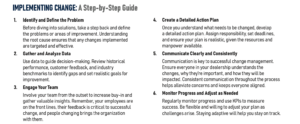
While the pitfalls can seem daunting, there are clear strategies that dealerships can adopt to ensure success when driving organizational change.
Assimilate Ideas Thoughtfully
Conferences, industry trainings, and internal brainstorming sessions are invaluable for generating ideas on how to improve your dealership. Having a steady stream of new ideas is critical for growth, but the key is to assimilate these ideas thoughtfully. Don’t rush into action the moment you return from an event. Instead, take time to digest the information and deter- mine which ideas are truly worth pursuing.
Prioritize Needs
While all 48 ideas you’ve come up with might be beneficial, not all of them need to be implemented immediately. Prioritization is crucial. Start by identifying which initiatives are most urgent and which will have the greatest impact on your business. Once you’ve established your priorities, create a timeline for implementation. Recognize that while everything can’t be accomplished in a single day, a methodical approach will yield significant results over time.
Develop a Strategic Plan
Nothing worth doing is accomplished without a plan. Many dealerships attempt to drive significant change without a clear strategy, leading to poor results. A well-crafted strategic plan outlines the changes to be made and breaks down the process into manageable steps. It should include timelines, key performance indicators (KPIs), and accountability measures to ensure progress is tracked and adjustments can be made as needed.
Accountability
Accountability is essential for driving successful change. Without it, even the best-laid plans can fall apart. Assign responsibility for specific tasks and hold regular check-ins to monitor progress. Establish clear KPIs and celebrate wins along the way to keep the team motivated. Accountability fosters ownership and ensures that everyone is working toward the same goal.
Change is essential for any dealership looking to grow and stay competitive in today’s market. However, attempting to implement too much, too quickly, can lead to failure. By avoiding common pitfalls such as rushing the process, having the wrong people in leadership roles, and neglecting to create a strategic plan, dealerships can significantly increase their chances of success.
By thoughtfully assimilating ideas, prioritizing needs, and developing a detailed, methodical plan, your dealership can achieve meaningful, lasting change that drives growth and improves performance. Remember, change is a journey, not a destination. With the right strategy, your dealership can navigate this journey successfully and emerge stronger on the other side.
 MICHAEL PIERCY is the vice president of dealer development for NAEDA. He has over 20 years’ experience in organizational leadership training and development and succession planning. Piercy joined the association in 2015 to help build the Dealer Institute as a complete solution for industry training and consulting needs. Along with DI Trainers, Piercy was instrumental in developing the library of training and consulting opportunities DI offers dealer organizations today. His current role, leading NAEDA’s Dealer Institute, allows him and his team to guide dealer organizations through training and consultative initiatives, as well as merger, acquisition, and succession planning.