
What is the difference between employees who are motivated to be elite performers versus those who are not?
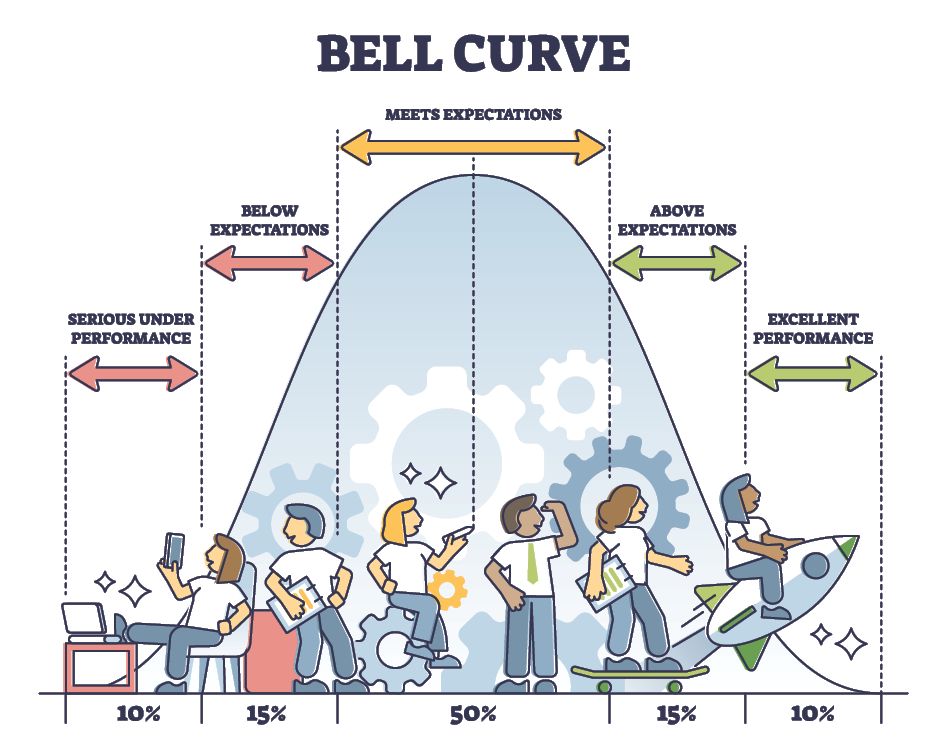
Inspect the following illustration of employee performance groups. The caveat with this normal curve is that I’m not sure the percentages are accurate, but I’m sure you will agree with the depiction of the different performance levels.
To answer our question, we must address the origin of psychological passion. The dynamics are easily depicted with the level of passion to be determined by the individual. The first source of psychological passion is making the statement remaining as is, is no longer an option for me. Examine the following comfort zone illustration and note the difference in the number of advantages (plus signs) versus disadvantages (minus signs).
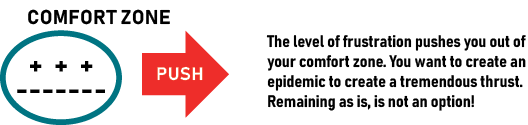
A case in point is the young man who was literally burnt out with his employment. His job was no longer challenging or meaningful. He wrestled with this issue for a while before deciding there must be more to life than this – remaining as is, was no longer an option for a healthy lifestyle.
With all of the frustrating energy-demanding releases, the next question to address is where do I direct this energy? Imagine being in a movie theater and every light, including the exit lights, going out while smelling smoke. Imagine the frustration within that room. The second key to psychological passion is to have a target. Suppose the exit lights suddenly came on to show the targets to exit the theater. Now, there are two sources of energy. One is the frustration to exit the theater. The second is the magnetic pull to safety through an exit.
You want the advantages of the target behavior to act like a strong magnet to literally pull you to a high performance as you have to have it. It’s analogous to buying something you really want, as it just sucks money out of your pocket.
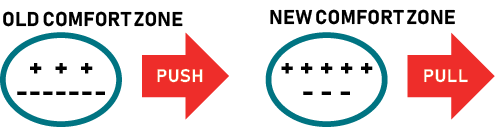
Here’s the beauty of personal motivation — it is a natural resource, and you can have all you want by regulating the intensity of the ratio of disadvantages/advantages.
Fear is a natural consequence as you approach the perimeter of your comfort zone, as illustrated below, and it plays a unique role in our lives to protect us from harm. High performers, however, have learned to overcome this natural defense and are comfortable with being uncomfortable. I know it sounds ridiculous, but high performers may even interpret fear as a positive sign of continuous improvement.
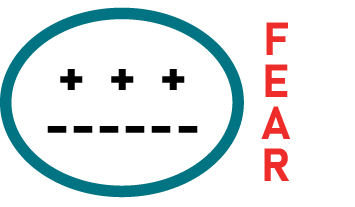
When fear raises its head, high performers know the antidote is to revisit the ratio of disadvantages/advantages and use the magnetic pull of the advantages to keep them on track.
In closing, when you believe your high performance represents your calling in life, i.e., purpose, the associated strong magnetic pull will help you overcome the inevitable struggles that occur along the journey. In the words of a ski instructor, keep your eyes fixed on where you want to go instead of looking at the tree when you’re out of control on the slope, as your body tends to follow your eyes. Yes, today’s struggles are the footsteps leading to tomorrow’s successes. You are now in control of your personal motivation.
Article Written by Dr. Larry Cole lead trainer for the North American Equipment Dealers Association’s Dealer Institute
 Larry Cole, Ph.D., is a lead trainer for and consultant to the North American Equipment Dealers Association’s Dealer Institute. He provides onsite training and public courses to improve business leadership effectiveness and internal and external customer service. Please send questions and / or comments to Larry at teammax100@gmail.com